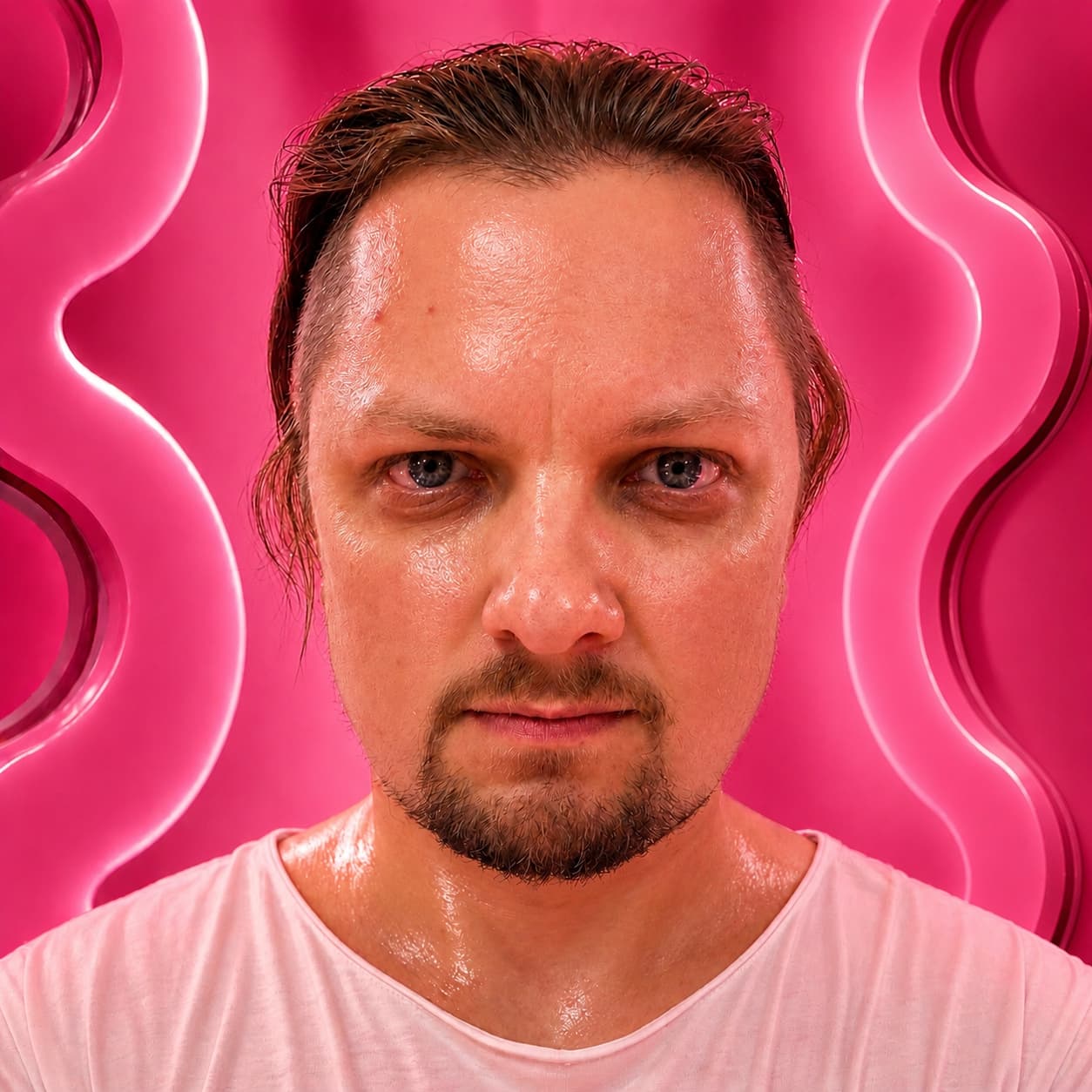
Aleksandr Smetanka is an artist based in Milan and Lisbon.
Sensual trippy loveforms is a collaborative artistic practice co-authored by Aleksandr Smetanka and Darya Melnikova. Working across moving image and stills, with installation as a developing direction, the practice explores synthetic organic forms, bodily ambiguity, desire, and transformation.
Melnikova and Smetanka co-develop the concepts, visual language, artistic hypotheses, and direction of the works. Melnikova participates throughout the process, shaping ideas, evaluating generated material, selecting images and sequences, and determining how individual works develop within the wider practice. Smetanka leads image-making, animation, editing, and public presentation. The works result from their shared iterative process rather than a separation between idea and execution.
The practice is publicly presented on Instagram through @asmetanka, where the works have reached audiences in the millions.
Melnikova and Smetanka have worked together for nearly twenty years across design, illustration, advertising, and digital visual culture. This shared professional history gives the practice its control of composition, surface, rhythm, and visual impact. Their experience of post-Soviet culture and its mechanisms of censorship, secrecy, and control informs the work’s sensitivity to the body and desire. Rather than turning that history into narrative, they allow it to return through form.
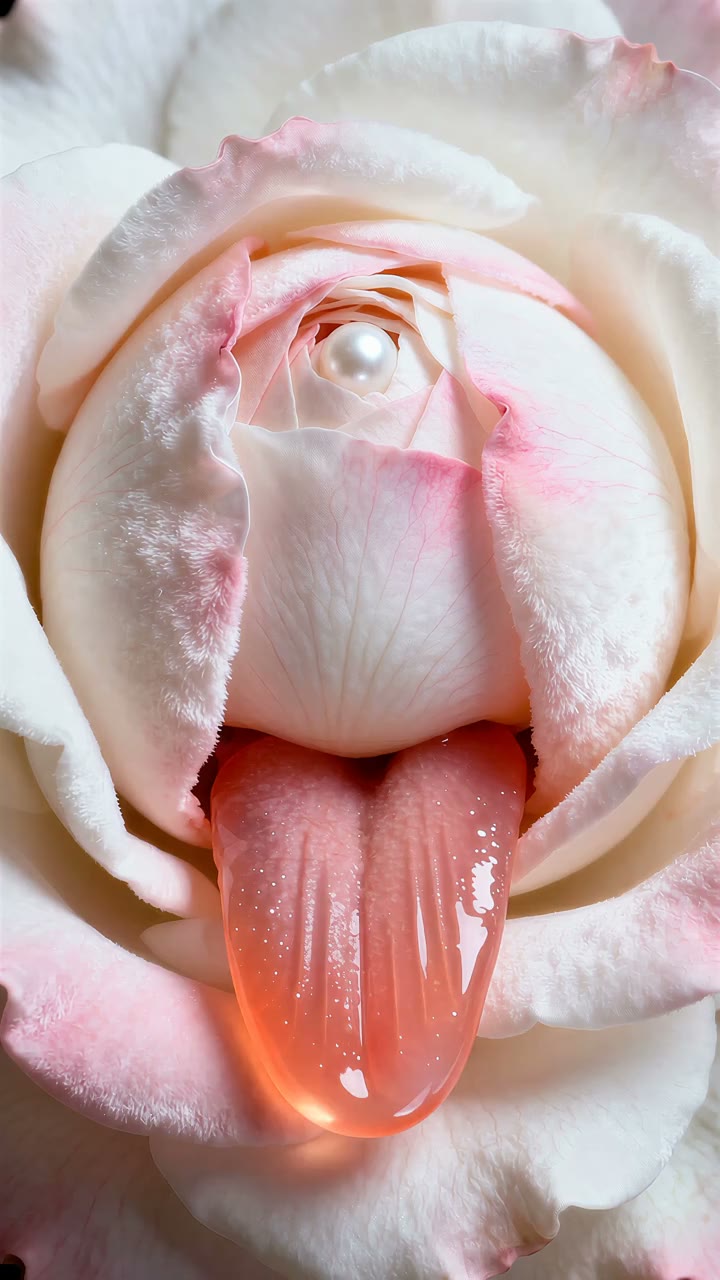
ConnectSensual trippy loveforms begins with forms that do not fully belong together. Flower, organ, mouth, ornament, skin, fluid, and creature are fused until they stop reading as separate things and begin to carry one unstable feeling. Tenderness and threat, attraction and discomfort, softness and violence remain in the same image.
The work is less about depicting objects than producing a state of looking. Forms shift before the mind can fix them. A petal becomes a lip becomes a wound before the eye can settle on any single one. Recognition starts, fails, and starts again, until analysis gives way to trance. This is the psychedelic force of the practice. The image is felt before it is understood.
The body is present without a figure. Openings, folds, membranes, fluids, tongues, petals, and surfaces keep the body active while removing identity, narrative, and portraiture. Desire no longer belongs to a person or a scene. It moves into matter itself, as if the image wants, opens, protects itself, or becomes something else.
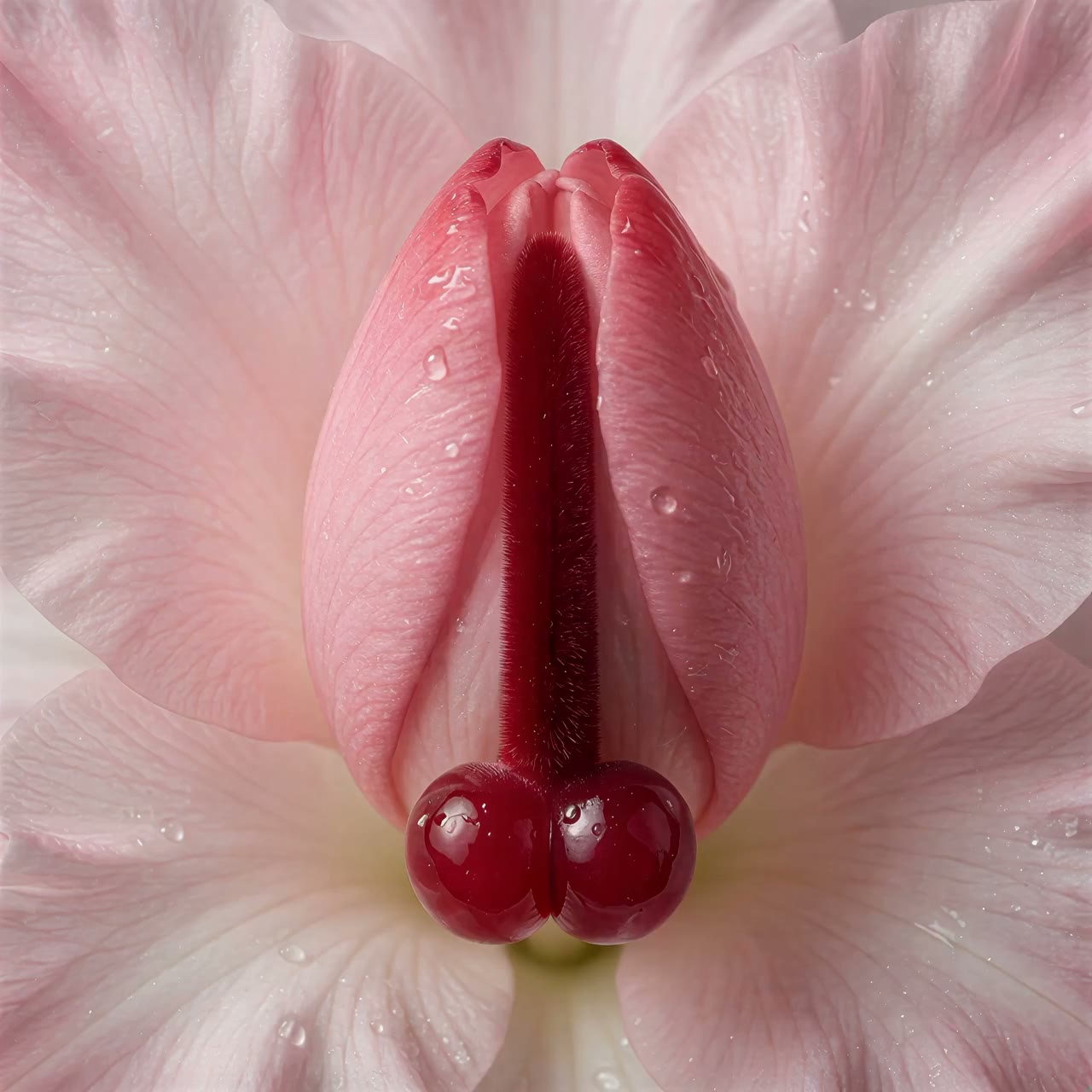
The beauty of the work is deliberately contaminated. It touches the wet, the interior, the wounded, the seductive, and the abject. A flower is not treated as decoration, but as a living sexual structure, already close to organ, trap, and threshold. The boundary between inside and outside keeps giving way, so a surface can read as petal or tissue, bloom or wound, protection or exposure, and that uncertainty is what makes the image feel dangerous as well as beautiful. The images hover between bloom and wound, ornament and anatomy, pleasure and unease.
The practice sits near Surrealism, biomorphic abstraction, the erotic object, and contemporary posthuman art. It is not a fantasy of a cleaner future or a better body. It looks at the body after the human figure has dissolved, where organism, machine, image, and environment begin to share the same surface.
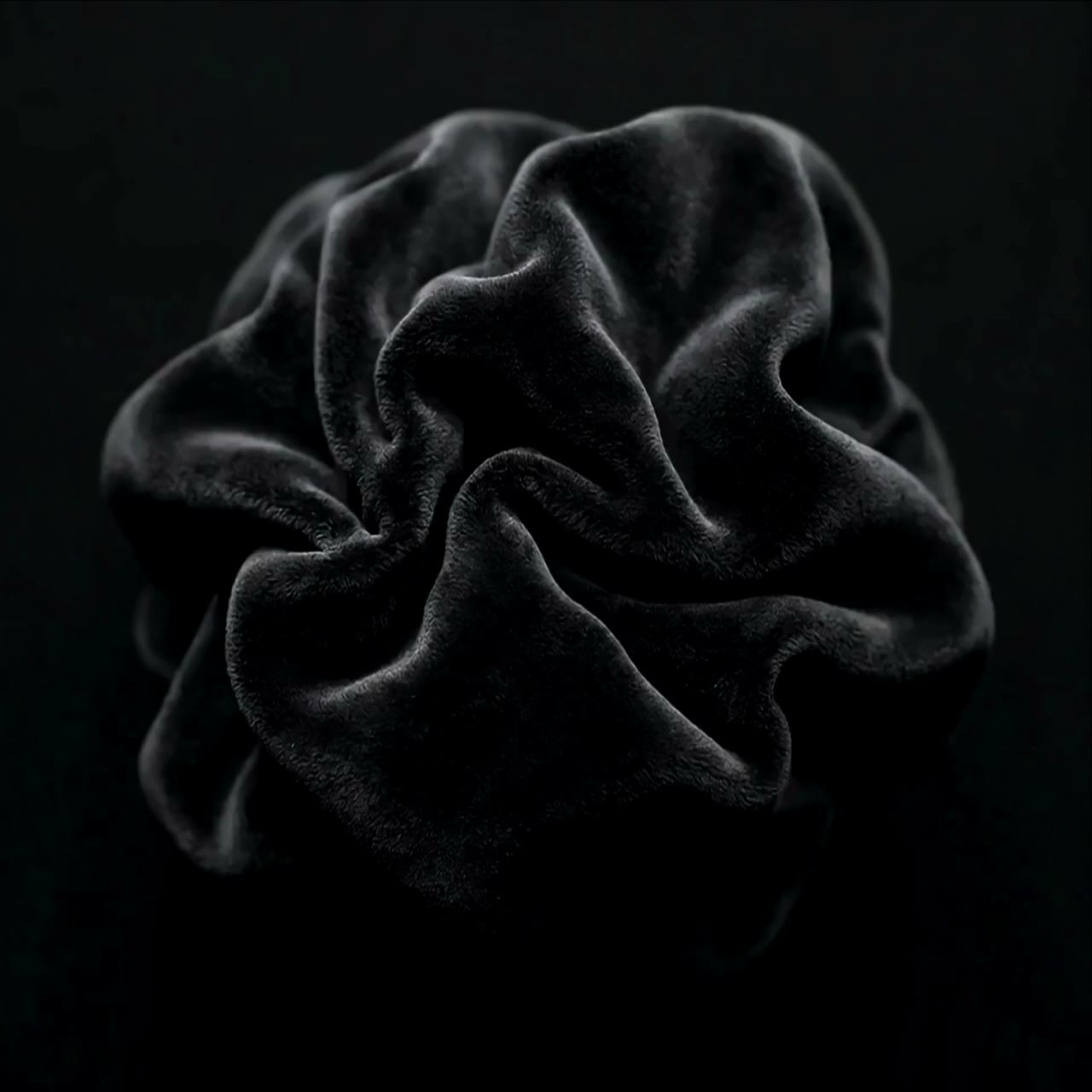
The work unfolds through series, from apertures and stamens to pierced mouths, velvet voids, reliquaries, and iridescent organs. Some works are immediate icons, clean and central enough to travel through the feed. Others are darker organisms that ask for slower looking. Both belong to the same system.
The images are made through a documented synthetic image practice, with repeated rules for form, material, transformation, and continuity. The tool is not the subject. The subject is the moment when incompatible forms become a precise sensation.
The erotic charge remains formal rather than explicit. The work approaches the edge of what can be shown while staying within abstraction, allowing ambiguity to carry what direct depiction would make literal.
Not floral illustration. Not pornography. Not horror. Not bio art. Not a fantasy of a better body.
Matter that seems to want something.